Gong Demo Mastery: A Sales Pro’s Practical Guide

A gong demo is a live or recorded product walkthrough that showcases an AI sales platform’s capabilities to a buying committee, with the goal of turning interest into a committed next step. For sales professionals, the gong demo is the highest-stakes moment in the deal cycle. Get it right, and you compress timelines. Get it wrong, and your champion walks back to a CFO who wasn’t in the room, armed with nothing but memory and a PDF. This guide covers what separates a forgettable presentation from one that actually moves deals forward, including how to prepare, execute, and follow up with precision.
What makes an effective gong demo presentation?
An effective gong demonstration starts with a clear value proposition tied directly to the prospect’s stated problems. Generic feature tours lose audiences within minutes. The best reps open by naming the exact pain point the prospect mentioned on the discovery call, then show how the platform solves it in real time.
Storytelling combined with live data creates deeper prospect trust than scripted walkthroughs. The reason is simple: a story gives context, and live data gives proof. When you show a call intelligence dashboard while narrating how it caught a competitor mention the rep missed, the prospect sees the value instead of hearing about it.

Pacing matters more than most reps realize. Expert demo practitioners treat the presentation as a dynamic conversation rather than a monologue, adapting content to prospect responses in real time. If a CFO leans forward when you show forecast accuracy, stay there longer. If a VP of Sales looks distracted during the CRM sync walkthrough, move on.
The most common demo killers are information overload and poor sequencing. Showing every feature signals insecurity, not capability. Pick three to five moments that map directly to the prospect’s top challenges, and build the entire narrative around those moments.
Key elements of a high-impact demo:
- Open with the prospect’s words. Quote something they said on the discovery call within the first 90 seconds.
- Show outcomes, not features. “Here’s what your team’s talk-time ratio looks like after 30 days” beats “here’s the analytics tab.”
- Build in pause points. Ask a confirming question every 8–10 minutes to check engagement and surface objections early.
- Avoid the feature dump. Three focused moments beat a 45-minute tour every time.
- End with a clear next step. Never close a demo without a specific date and action on the calendar.
Pro Tip: Record your own demos and review them with AI call transcription. You will spot filler phrases, missed objection signals, and pacing issues that feel invisible in the moment.
How to prepare for a gong demo
Preparation is where most demos are won or lost before the meeting starts. A smooth live performance depends on technical setup, prospect research, and rehearsal. Skipping any one of these creates unnecessary risk.
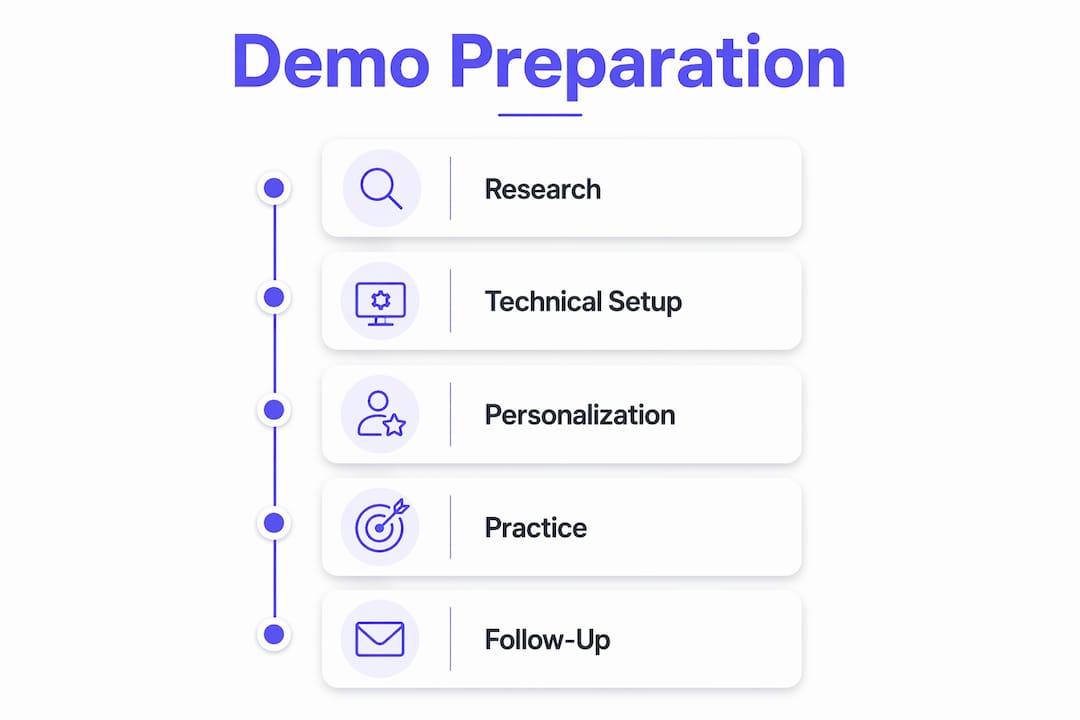
Technical setup checklist
| Requirement | Details |
|---|---|
| Stable internet connection | Use a wired connection when possible; test speed before every demo |
| Screen recording tool | Use a no-install browser recorder to capture the session without setup friction |
| CRM data loaded | Pull the prospect’s account history and open opportunities before the call |
| AI notetaker active | Enable an AI call notetaker to capture objections and key moments automatically |
| Backup slides ready | Prepare a static slide deck in case live software access fails |
Prospect research and customization
Personalization is the single biggest differentiator between average and top-performing demos. Rehearsing with recorded call sessions and AI-generated transcripts sharpens your delivery by surfacing the exact phrases and objections your prospect used. You walk in knowing their language, not guessing at it.
Pull the prospect’s LinkedIn, recent press releases, and any notes from previous calls. Map their org chart. Know who the economic buyer is, who the technical evaluator is, and who your champion needs to convince internally. A demo built for a three-person buying committee lands differently than one built for a solo decision-maker.
- Research the prospect’s industry benchmarks and reference them during the demo.
- Customize the data shown in the platform to reflect their team size and sales motion.
- Prepare one slide or screen that uses the prospect’s company name and logo.
- Identify the one feature most likely to create an “aha” moment for their specific role.
Step-by-step guide to running a successful gong demo
A well-run demo follows a clear structure. Improvising the flow mid-call is a sign of under-preparation, and prospects feel it.
-
Open with rapport and agenda. Spend two to three minutes confirming the agenda and asking one question that reconnects to the discovery call. “Last time you mentioned forecast accuracy was your biggest headache. Is that still the priority today?” This signals you listened and sets the frame for everything that follows.
-
State the value proposition in one sentence. Before touching the product, say exactly what the platform does and for whom. Keep it to 20 words or fewer. Clarity here builds confidence for the rest of the session.
-
Demonstrate the first key feature live. Choose the feature most relevant to the prospect’s top pain point. Walk through a real scenario, not a sanitized demo environment. AI-driven call intelligence lands hardest when shown against a real sales call recording, not a staged one.
-
Use AI insights to handle objections in real time. When a prospect pushes back, pull up the relevant data on screen. If they question forecast accuracy, show the model’s historical performance. Objections handled with live data close faster than objections handled with talking points.
-
Build in an interactive moment. At the midpoint, ask the prospect to name their biggest open question. Answer it live using the platform. This turns the demo from a presentation into a working session, and working sessions create buy-in.
-
Show the integration story. Demonstrate how the platform connects to the tools they already use, whether that is Salesforce, HubSpot, or Slack. Buyers need to see that adoption will not require a rip-and-replace.
-
Close with a summary and next step. Recap the three moments that resonated most, based on the prospect’s reactions during the call. Then propose a specific next step with a date. Effective demos close with a clear action, not a vague “we’ll be in touch.”
Pro Tip: Send a personalized follow-up within two hours of the demo. Use an AI follow-up tool to auto-draft the email with the key moments and agreed next steps already populated. The 48 hours after your demo are where most deals stall or die.
Common challenges in gong demos and how to fix them
Every rep hits turbulence during a live presentation. The difference between reps who is a recover and reps who lose the room is preparation and adaptability.
- Technical glitches. Always have a backup plan. Keep a pre-recorded screen capture of the key demo moments on your desktop. If the live environment fails, switch to the recording without apology and keep moving.
- Disengaged prospects. If you notice silence or short answers, stop presenting and ask a direct question. “What would make this more relevant to your situation?” resets the dynamic and gives you real signal.
- Complex feature questions. When a prospect asks about a feature you cannot demonstrate live, be direct. Say you will follow up with a specific answer within 24 hours, then do it. Bluffing destroys credibility faster than any technical gap.
- Time constraints. If the meeting runs short, cut to the single most important moment and close with a next step. A tight, focused 20-minute demo beats a rushed 45-minute tour every time.
- Live feedback that contradicts your plan. Tailoring content length and depth based on prospect signals is a skill the best reps build deliberately. If the prospect keeps returning to one topic, follow their lead and go deeper there.
“The best demo reps I’ve watched don’t follow a script. They follow the prospect. They use the script as a safety net, not a leash. When a CFO lights up over a specific data point, the great rep stops and lives there for five minutes. The average rep checks the next slide.”
Key takeaways
A gong demo succeeds when preparation, personalization, and a clear close structure work together from the first minute to the follow-up email.
| Point | Details |
|---|---|
| Personalize before you present | Research the buying committee and customize every demo screen to the prospect’s context. |
| Lead with outcomes, not features | Show what the platform produces for teams like theirs, not a tour of every tab. |
| Use AI tools for rehearsal | Review call transcripts and recordings to sharpen delivery and anticipate objections. |
| Build in interaction | Ask confirming questions every 8–10 minutes to surface objections and maintain engagement. |
| Follow up fast | Send a personalized summary within two hours; deals stall when follow-up is slow or generic. |
What I’ve learned from watching hundreds of demos fall apart
I’ve seen reps walk out of a demo convinced they nailed it, only to watch the deal go cold within a week. The pattern is almost always the same. The live session went well, but nothing happened in the space between the demo and the next meeting. The champion loved it. The CFO never saw it. The CISO had questions nobody answered.
The uncomfortable truth is that most demo training stops at the presentation itself. Reps practice their opening, rehearse their feature walkthroughs, and polish their close. But the deal doesn’t close in the room. It closes in the internal meeting you weren’t invited to, the Slack thread you can’t see, and the email your champion forwarded to three stakeholders who each had different questions.
What actually separates high performers is what they do after the demo ends. They send a follow-up that feels personal, not templated. They create a version of the demo their champion can share with the CFO without losing the narrative. They track whether that content gets opened, forwarded, or ignored. That feedback loop is what winning demo patterns are built from, not gut feel.
The technology to do all of this exists. The reps who use it consistently close more deals. The ones who rely on memory and a follow-up email template wonder why their pipeline stalls after a great demo.
Authenticity matters too. Prospects can tell when you’re running a script versus when you genuinely understand their problem. The preparation work, the research, the rehearsal with call recordings, all of it shows up as confidence and specificity in the room. That’s what builds trust fast enough to move a deal.
— Daniel
How Trailercast fits into your demo workflow
Running a strong live demo is only half the equation. What happens after the call determines whether the deal moves or stalls.
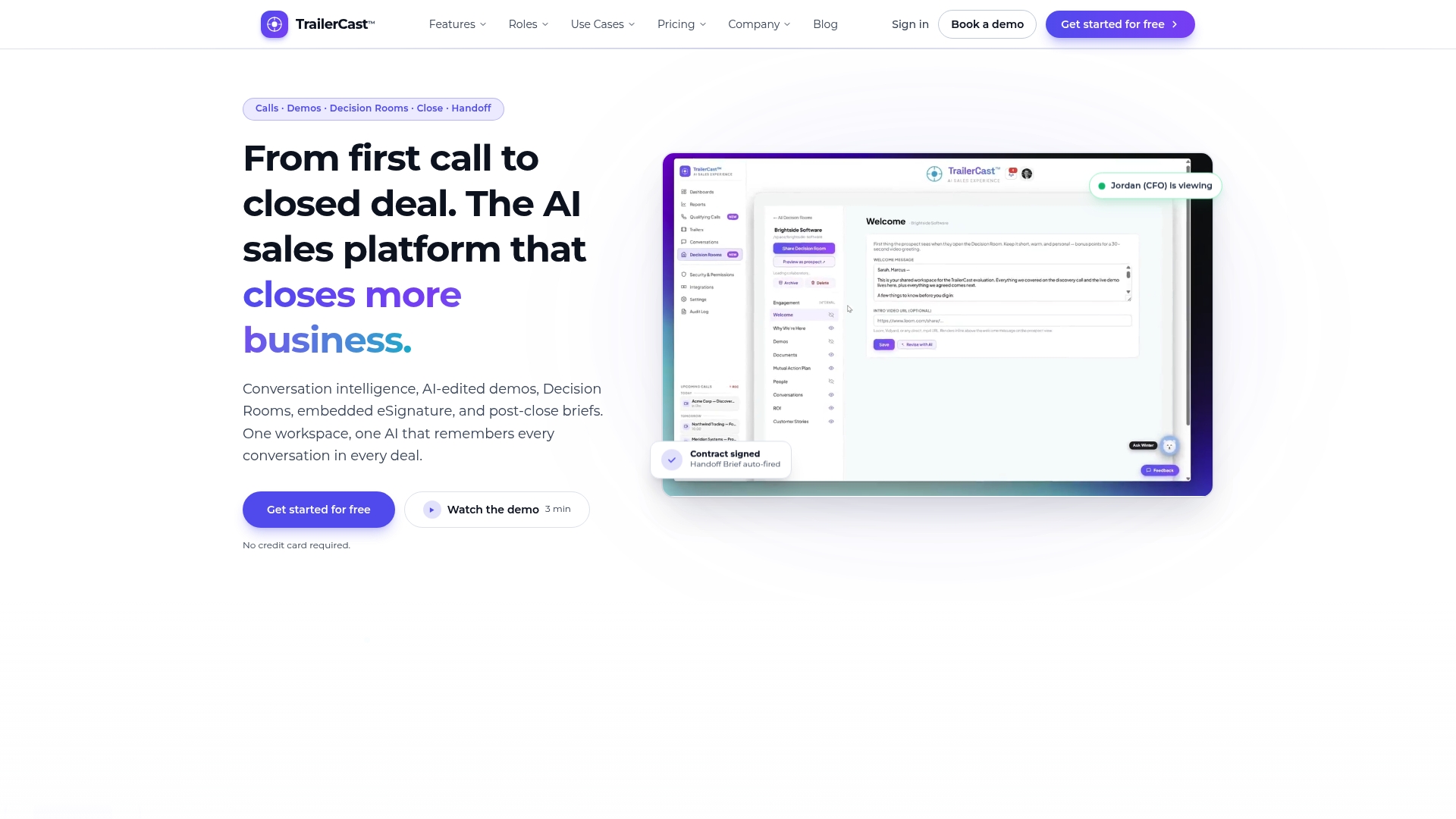
Trailercast is an AI sales platform built for exactly this problem. After your demo ends, Trailercast’s AI automatically edits the recording into a branded trailer, selecting the 8–15 minutes that mattered most. Your champion gets a shareable, personalized highlight reel instead of a 60-minute recording nobody will rewatch. You can create a CFO version focused on ROI and a CISO version focused on security, each forwarded through a tracked Decision Room that shows you exactly who watched what. From first call to closed deal, Trailercast keeps the deal coherent even when you’re not in the room.
FAQ
What is a gong demo in sales?
A gong demo is a live or recorded walkthrough of an AI sales platform’s features, designed to show prospects how the tool solves their specific revenue challenges. The goal is to move a buying committee from interest to a committed next step.
How long should a sales demo be?
Most effective demos run 30–45 minutes, with the core product walkthrough limited to three to five focused moments. Shorter, targeted sessions consistently outperform long feature tours.
How do I handle objections during a demo?
Pull up relevant live data on screen to address the objection directly. If you cannot answer in the moment, commit to a specific follow-up within 24 hours and deliver on it.
What should I send after a gong demo?
Send a personalized summary within two hours that recaps the key moments, addresses any open questions, and proposes a specific next step with a date. AI follow-up tools can auto-draft this using the call transcript.
How do I keep prospects engaged during a long demo?
Ask a confirming question every 8–10 minutes and build at least one interactive moment into the middle of the session. Tailoring content depth to prospect signals in real time prevents demo fatigue.